
Weight of a Typical Rapid Radio
Fast radio bursts are bright, unresolved (pointsource-like), broadband (spanning a wide range of frequencies) millisecond flashes that baffle astronomers. These millisecond pulses are found all over the sky, not concentrated in the Milky Way plane as astronomers had expected.
Easily manage music content and metadata directly within Rapid using the UI. Easily import and match incoming tracks from your automation system to on-air playlists. Many walkie talkies on the market today are FRS (Family Radio Service) radios, which don’t require a license. However, most radios with more power than an FRS device require a license from the FCC.
To obtain a license, you must provide the FCC with a variety of information including your name, address, and federal tax ID number if applicable. You may also be required to provide the latitude and longitude of your site. In addition, you must submit a site plan showing the location of all transmitters and towers.
Once approved, you will receive short-term authorization while the application is processed. At the end of that period, you will receive full approval together with a copy of your license through email. The process may take a few weeks, depending on the complexity of your application. You must then notify the FCC when you begin operations. You must also notify the FCC when you relocate your antennas.
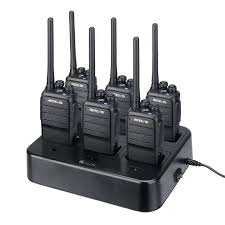
Radios vary in size and weight depending on how much functionality they have. For example, the Backcountry Access BC Link 2.0 weighs just over 10 oz. The mic and receiver are separate, making it easy to carry in backpacks or jacket pockets. The BCA is also license-free, which makes it a great option for hikers and climbers.
What’s the Weight of a Typical Rapid Radio?
Rapid provides high-speed instant group and individual voice communications at broadband quality levels not possible with cellular networks. It supports a wide range of geospace and astronomy applications, including imaging radar interferometry for studying phenomena in the ionosphere, precision measurement of solar and Jovian radio bursts, and more.
rapid radios offers push-to-talk nationwide walkie-talkies with no monthly fees, unlimited range, and long battery life. They are easy to use and suitable for families, businesses, and emergency use. They provide free shipping in the USA and offer a 100% satisfaction guarantee. They also have a variety of plans, including a package that includes a radio and one year of service for $50.
A radio’s battery life can be a critical factor for many businesses and organizations that rely on two-way communication. The good news is that there are some easy ways to improve battery life. By only using the radio to communicate when needed, and by storing batteries in a cool dry place, you can get up to 24 hours of battery talk time per charge for some radio models.
It’s important to note that the battery talk time figures for a particular radio are given in terms of a typical working shift, which is based on 55% transmitting and 45% receiving. In addition, the battery performance is based on a specific type of battery that is assumed to last through the standard charging cycles.
For example, the Sony manual states that 1 AA battery will last for 140 hours of talk time. This is a very conservative estimate. To get a more accurate figure, we suggest that you use a multimeter to check the voltage of the battery cells and multiply them by 10.8 mW to calculate the actual battery power in watt-hours (Wh). This will give you a better idea of the battery’s true talk time.

